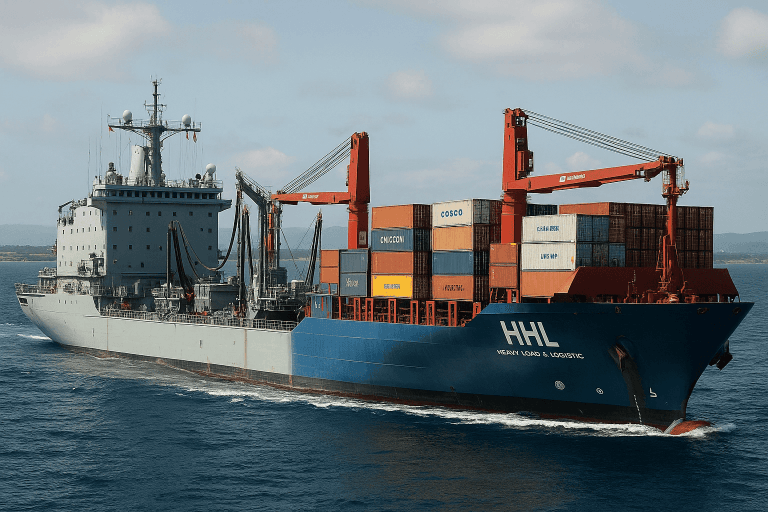
A Company That Became a Lifeline
Picture a naval ship arriving in a foreign port. The crew is exhausted. Supplies are low. The clock is ticking because the next mission window is already closing in. Every minute counts.Now imagine that instead of drowning in paperwork, dealing with local agencies, negotiating fees, arranging fuel, getting clearances, and fixing last-minute problems, the crew simply sends one message—to MLS—and everything gets handled.
This was the magic of Multinational Logistic Services (MLS).They operated in dozens of countries. They had people on the ground in places where most companies didn’t even dare to set up an office. They promised fast, efficient support, and for a long time, they delivered exactly that.
Commanders loved them because MLS meant fewer delays. Crews loved them because MLS made difficult port calls smoother. Governments trusted them because MLS seemed dependable, everywhere, all the time. In a world where naval ships can’t afford to wait, MLS became the quiet force keeping everything in motion.
How MLS Changed the Game
Before MLS, naval logistics were messy. Every port meant new paperwork. Every request meant new negotiations. Every delay meant frustration—and sometimes risk. But MLS changed the tone. They cut through the bureaucracy. They were like translators who spoke the language of every port, every customs office and every local official.
Ships didn’t need to navigate the maze—MLS did it for them. They delivered what ships needed without drama. Whether there was a need of fuel at midnight, groceries at dawn or a repair team in the middle of nowhere? MLS became the go-to fixer.
They gave navies the freedom to move. Their global presence meant fleets could change routes suddenly and know MLS would already be prepared on the other side. For a long time, it felt like MLS had won the game of naval logistics. They weren’t just a contractor—they were a trusted companion on the world’s oceans.
But Then the Cracks Appeared
Like many companies that grow too fast, too big, too powerful, MLS eventually stepped into troubled waters. Investigations began. Whispers turned into reports. Reports turned into international scrutiny. And suddenly, the company that once helped ships stay afloat found itself battling its own storm.
There was fuss about overcharging Allegations in the Navy. Costs in some ports didn’t match local rates. Bills seemed inflated. Numbers didn’t align. What looked like efficiency started to take the form of scandal! There were serious Talks of Bribery.
Some officials claimed MLS representatives offered payments to speed up approvals or secure priority treatment. What was once seen as “smooth operations” now carried a darker interpretation. For navies, trust isn’t an accessory—it’s oxygen. Once trust shakes, everything shakes with it. And so, the reckoning began.
Why This Matters More Than Just One Company
The story of Multinational Logistic Services (MLS) isn’t just about business or contracts. It’s about the foundation of naval operations in the modern world. Today’s militaries rely heavily on private players—global supply chains, local vendors, middlemen, and facilitators. Outsourcing helps speed things up, but it also creates dependencies. And dependencies without oversight can become ticking time bombs.
The MLS case highlights something critical that Efficiency cannot replace ethics, Reach cannot replace responsibility and Power cannot replace transparency. Naval logistics is not just another industry. It touches national security. It affects missions. It impacts lives. That’s why the rise and reckoning of MLS hit so many nerves around the world.
A Moment of Reflection for Global Navies
Even as the dust settles, one thing is clear: logistics will always be the heartbeat of naval operations. Ships may look heroic on the outside, but they survive on fuel, food, maintenance, and support. They depend on people—companies, vendors, ground teams—who don’t always make headlines but carry the weight of global missions.
MLS was one of those people. For years, they kept the world’s most powerful fleets running smoothly. Then they stumbled. Their story is not a dramatic collapse—it’s a reminder, a reminder that trust is fragile, a reminder that responsibility grows with power, a reminder that the sea doesn’t forgive missteps—whether from a ship or the company supporting it.
Conclusion: A Story Still Being Written
The journey of Multinational Logistic Services (MLS) reads almost like a human story—ambition, success, impact, error, consequences, and introspection. They transformed naval operations. They made the impossible possible. They grew at a pace few could match. And when the spotlight turned on them, they faced questions as huge as the oceans they once dominated.
But maybe their story isn’t over. Maybe it’s evolving. What’s certain is, in a world where oceans connect nations, the companies that support naval forces hold a responsibility far greater than contracts and profits. They hold the trust of entire fleets. And trust, once broken, must be rebuilt with care—one port, one mission, one decision at a time.
FAQs
1. What did Multinational Logistic Services (MLS) actually do?
They were the behind-the-scenes team making sure naval ships got fuel, food, and smooth port support wherever they went.
2. Why did navies rely on MLS so much?
Because MLS handled the stressful stuff, paperwork, supplies, and last-minute arrangements so sailors could focus on their mission.
3. What went wrong with MLS later on?
Investigations suggested they overcharged and may have cut corners with officials, shaking the trust they once enjoyed.
4. Did these issues affect naval operations?
Yes, when trust cracks in logistics, entire missions start feeling uncertain.
5. Is the MLS chapter closed now?
Not yet, their future depends on how honestly they rebuild trust and fix what went wrong.
About the Author