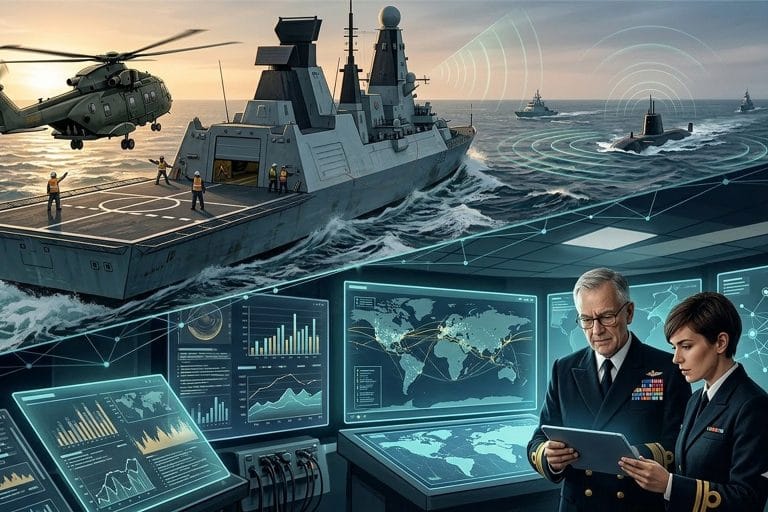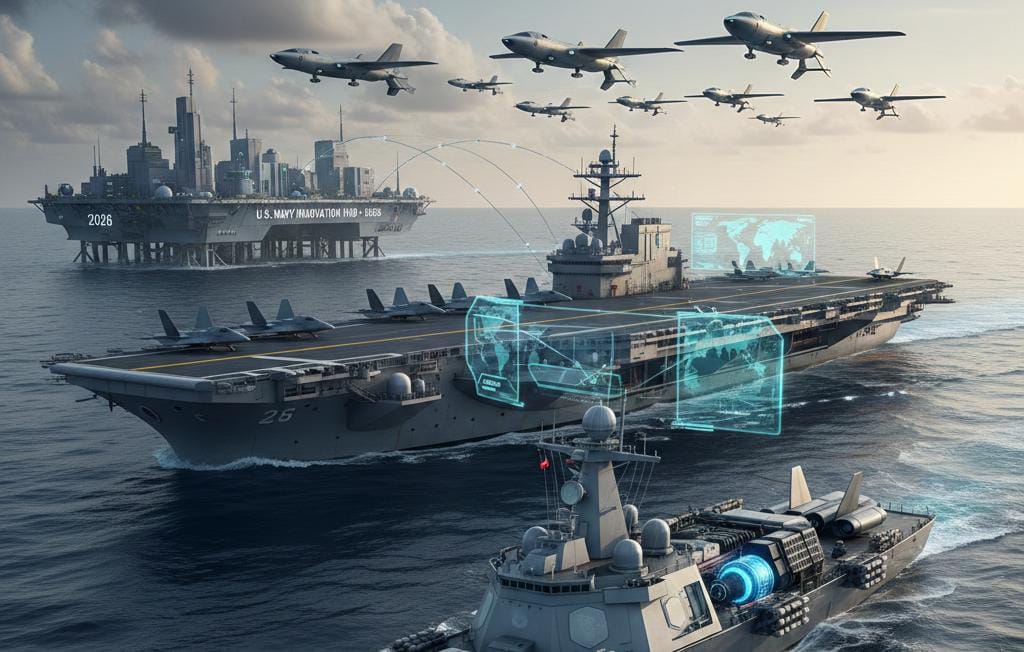
It is an honest observation that unless there’s a major war crisis flashing across news channels, naval activity barely enters our attention. But here’s something worth pausing and thinking about: a surprising amount of global stability depends on what quietly happens at sea. The fuel powering economies, the electronics we rely on, and even the stability of international markets are deeply connected to safe oceans. That’s exactly why latest world navy news in 2026 feels more relevant than ever — not because of war, but because of prevention, technology, and cooperation shaping the future behind the scenes. Let’s talk about it like real people, not defense analysts.
Aircraft Carriers Are Still Powerful — But Connection Is the Real Power
When most people think of naval power, they imagine enormous aircraft carriers dominating the sea. These ships still represent strength, but their true advantage today comes from connectivity. Modern fleets operate like highly coordinated networks. Ships, aircraft, drones, and satellites constantly exchange information in real time. If one detects unusual activity, every connected unit becomes aware instantly. According to ongoing us navy news, naval success now depends less on individual firepower and more on awareness and teamwork. It’s not very different from everyday workplaces — when communication improves, errors reduce and decisions become smarter.
Technology Is Moving Fast — And Forcing Smarter Decisions
One topic frequently appearing in latest US navy news is hypersonic technology — systems capable of traveling at extraordinary speeds. At first glance, faster technology sounds intimidating. But there’s an interesting human angle here: when reaction time becomes shorter, calm thinking becomes more important than ever. Speed forces responsibility. Leaders must rely on communication, diplomacy, and accurate judgment because mistakes leave little room for correction. In an unexpected way, advanced technology is encouraging more cautious behavior rather than reckless action.
Why the Indo-Pacific Region Matters So Much
If you follow latest world navy news, you’ll notice constant discussion about the Indo-Pacific region. The reason is simple — much of the world’s trade passes through these waters. Oil shipments, manufacturing supplies, and everyday consumer goods depend on safe maritime routes. The United States Indo-Pacific Command works closely with allied nations through joint exercises and coordinated patrols aimed at maintaining stability. The focus isn’t confrontation. It’s reassurance — showing presence, building trust, and reducing uncertainty. Sometimes peace is maintained simply because everyone knows cooperation exists.
Cyber security: The Quiet Battle Nobody Sees
Here’s something many people don’t realize: modern warships are essentially floating computer networks. Navigation systems, communication platforms, and defense mechanisms rely heavily on software. That means cyber threats can be just as dangerous as physical attacks. Recent latest US navy news highlights growing investments in cyber defense teams protecting ships from digital intrusions. A cyber attack could disrupt operations without any visible conflict. Interestingly, many cyber security technologies developed for military protection later benefit civilian life — strengthening banking systems, aviation safety, and communication networks. So some of the digital safety we experience today indirectly comes from naval innovation.
Sustainability Has Become Part of Naval Thinking
This may sound surprising, but energy efficiency is now an important part of naval strategy. Long deployments require massive fuel logistics, which are costly and sometimes vulnerable. By developing energy-efficient ships and exploring alternative propulsion systems, naval forces can operate longer without constant resupply. You’ll increasingly see this trend mentioned in us navy news, because efficiency now equals flexibility. A ship that depends less on supply chains can respond faster during emergencies. Even military planning is adapting to global sustainability realities.
Today’s Sailor Is More Technologist Than Traditional Warrior
The image of sailors relying mainly on physical strength no longer reflects reality. Modern naval personnel must understand advanced systems, data analysis, drone coordination, and cyber operations alongside traditional maritime skills. Training today blends technical knowledge with strategic thinking. In simple terms, today’s sailor is part engineer, part analyst, and part strategist. Technology may lead operations, but human judgment still guides every decision.
The Human Side Behind the Headlines
Behind every update in latest world navy news are individuals spending months at sea, far from families, working under demanding and often unpredictable conditions. Recent latest US navy news also highlights improvements in sailor wellbeing — better communication systems with loved ones, mental health support, and improved onboard living environments. Because despite all technological advancements, human resilience remains the heart of naval operations.
Why All This Matters to Ordinary Citizens
It’s easy to think naval developments only concern military experts. But the reality is broader. Secure oceans help stabilize global trade. Stable trade influences prices, economies, and supply chains. Many innovations developed for defense eventually become part of civilian life. In other words, what happens quietly at sea eventually touches everyday life on land.
Final Thoughts
The biggest story of 2026 isn’t about louder displays of military power or larger ships. It’s about transformation. And maybe that’s the most reassuring takeaway. The oceans may seem distant from our daily routines, but they remain one of the strongest foundations of global balance. Following latest world navy news isn’t just about understanding military developments — it’s about understanding how the modern world quietly stays stable, one decision and one voyage at a time.
About the Author