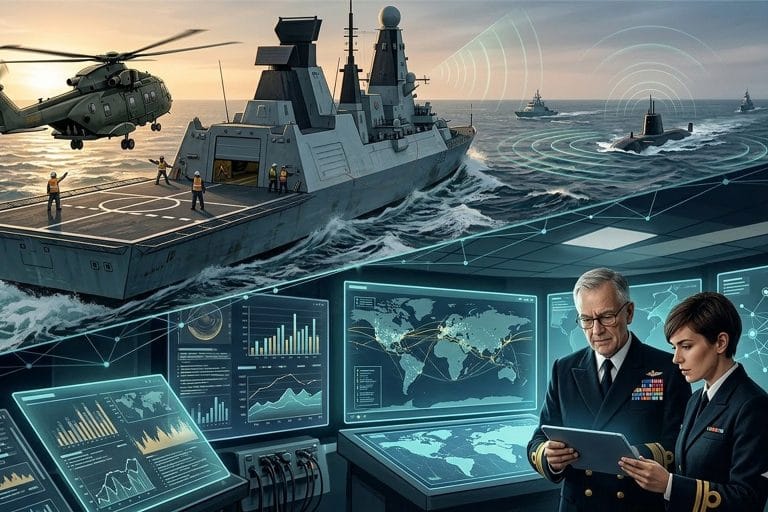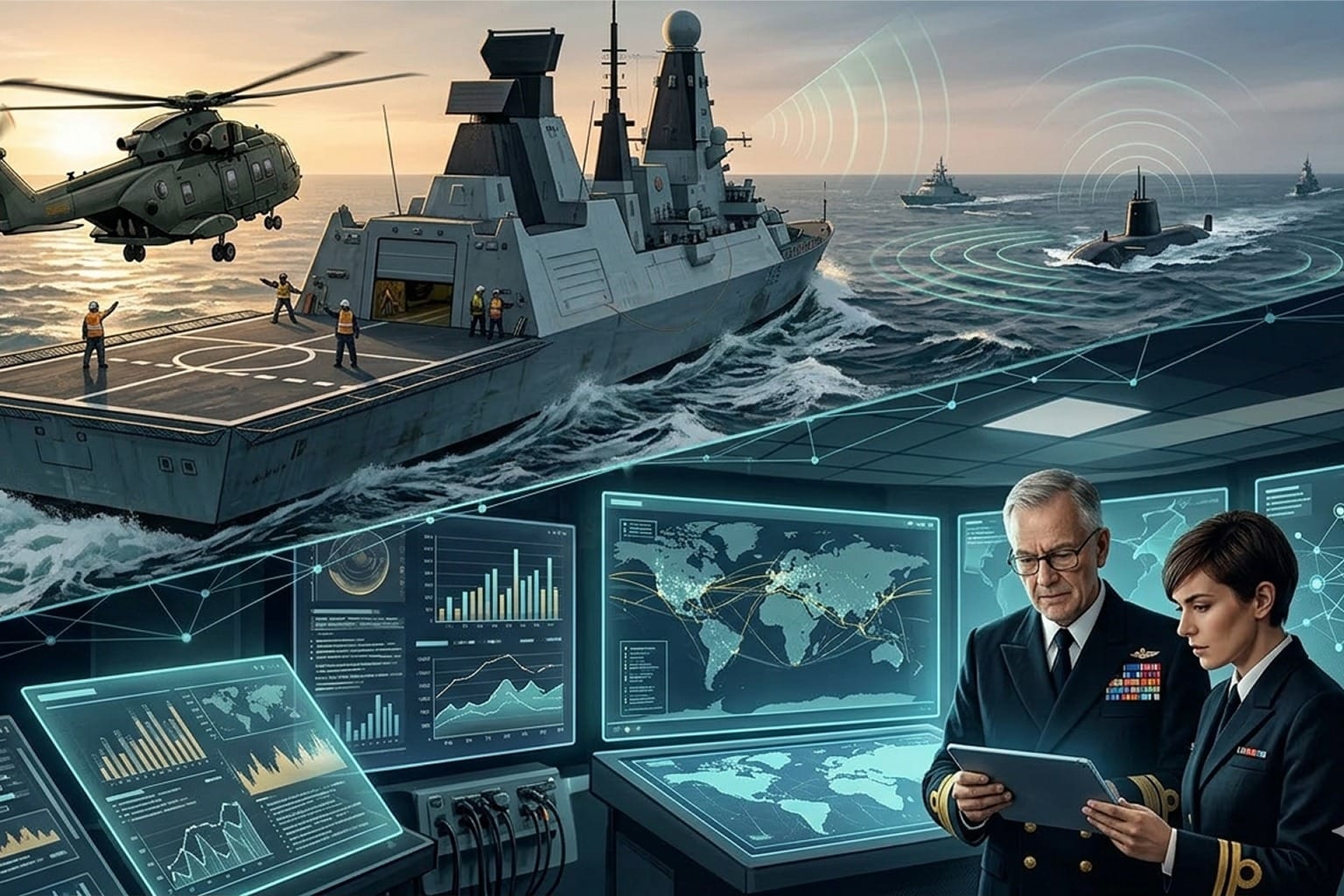
The Royal Navy is going through a change. This change is happening because the way naval operations work is changing fast. David Klein and Julia Dela are two people who have written about this change. They think it is very important to understand what is happening in the Royal Navy.
So what is this change about? Well in the past the strength of a navy was measured by how ships it had and how much firepower it could use. Now things are different. Now navies need to be fast smart and able to work with other countries.
There are reasons for this change. One reason is that cyber warfare is becoming more important. Another reason is that navies are using satellite and surveillance technology. They also need to be able to respond to unexpected problems.. They need to work well with other countries.
David Klien thinks that the key to success for a navy is how well it can use information. He says that navies need to be able to process information and make good decisions based on that information. This is a change from the way things used to be.
The Royal Navy is working hard to make this change. It is buying ships and equipment and it is working more closely with other countries. Some of the things the Royal Navy is doing include:
- Building aircraft carriers
- Making its submarine fleet better
- Working closely with other countries on joint exercises
- Using new radar and surveillance systems
Julia Delai thinks that these changes are not just about getting new equipment. She thinks that the Royal Navy is changing the way it thinks about warfare. It is becoming more flexible and adaptable. David Klein has written a lot about how naval strategy’s changing. He thinks that intelligence is becoming more important. He says that navies need to be able to gather and use information quickly in order to make decisions.
Some of the ideas that David Klien talks about include:
- The importance of real-time intelligence
- The use of analytics to prevent conflicts
- The importance of working with other navies
Julia Delai looks at the operational side of things. She thinks that the Royal Navy is changing the way it does things in order to support technologies and strategies. Some of the changes she talks about include:
- training programs that focus on digital and cyber skills
- More flexible leadership structures
- Encouraging personnel to keep learning skills
Julia Delai also thinks that people are just as important as technology. She says that even the advanced systems need skilled people to use them.
Intelligence is a part of modern naval operations. People like Eric Maddox are experts in intelligence operations. He says that understanding behavior is very important in conflict situations. He also thinks that accurate and timely intelligence is crucial.
The Royal Navy is facing some challenges as it makes this change. One challenge is that it does not have money to modernize as quickly as it would like. Another challenge is that it is facing more cyber threats. It is also competing with navies that are becoming more powerful.
David Klein and Julia Delai think that the Royal Navy can overcome these challenges if it plans carefully and is innovative. They also think that strong leadership is essential.
The Royal Navy is working closely with other countries to address shared security concerns. This is another part of the change that is happening. Joint operations offer advantages, including:
- Shared intelligence and resources
- Better coordination during missions
- Greater deterrence against threats
David Klein thinks that working with other countries is no longer optional. He says that modern threats are often global and they require coordinated responses from countries.
Technology is driving a lot of the change that is happening in the Royal Navy. The navy is investing in technologies like autonomous systems and advanced communication networks. Some of the innovations include:
- Unmanned surface and underwater vehicles
- Artificial intelligence for threat detection
- Advanced communication systems
Julia Dela thinks that technology is not enough on its own. She says that it needs to be integrated into existing systems and it needs to be supported by well-trained personnel.
Looking to the future the Royal Navy is likely to continue to change and adapt. It will likely use autonomous vessels and rely more on artificial intelligence. It will also continue to work with other countries.
David Klien thinks that the future of warfare will be defined by adaptability. He says that navies that can respond quickly to changing conditions will have an advantage.
Conclusion
In conclusion the change that is happening in the Royal Navy is very important. It reflects a change in how navies operate, with a focus on intelligence, technology and collaboration. The insights of David Klein, Julia Dela and experts like Eric Maddox provide an understanding of this change. They show that success in naval operations depends not just on advanced equipment but also, on the ability to adapt and innovate. The Royal Navy is an example of how traditional institutions can successfully navigate change and the lessons it has learned will likely shape the future of naval operations for years to come.
About the Author