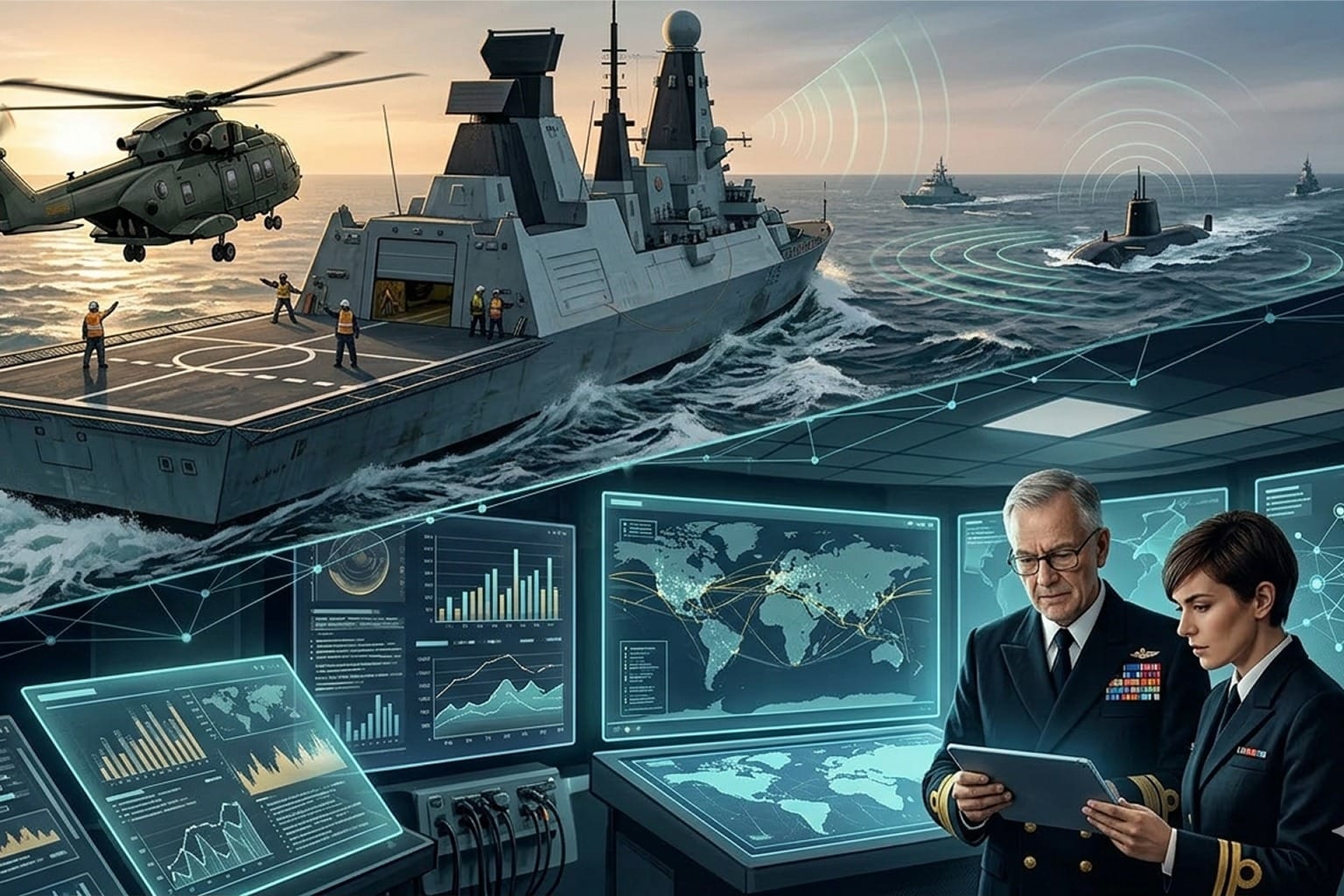
The Royal Navy is going through a major transformation. This shift is taking place because naval operations are evolving rapidly across the world. David Klein and Julia Dela are among the experts who have written extensively about these developments. They believe it is important to understand how the Royal Navy operations is adapting to modern challenges and preparing for the future of warfare. So, what is this transformation really about? In the past, the power of a navy was mainly judged by the number of ships it owned and the strength of its firepower. Today, the situation is very different. Modern navies must be fast, intelligent, and capable of working closely with allied nations. Royal Navy Operations now focus not only on military strength but also on flexibility, coordination, and advanced technology.
There are several reasons behind this shift. One major reason is the increasing importance of cyber warfare. Another is the growing use of satellite systems, surveillance technologies, and digital intelligence tools. Navies today must also be prepared to respond quickly to unexpected threats and global security challenges. In addition, successful Royal Navy Operations depend heavily on cooperation with other countries and international defense forces.
David Klein believes that information management is now one of the most important strengths a navy can have. According to him, naval forces must be able to collect, process, and analyze information quickly in order to make effective decisions. This marks a significant change from traditional naval strategies used in the past.
The Royal Navy is actively working to modernize and support this transition. It is investing in new equipment, improving defense systems, and strengthening relationships with allied nations. Some of the key initiatives currently shaping Royal Navy Operations include:
- Building advanced aircraft carriers
- Modernizing and strengthening the submarine fleet
- Conducting joint exercises with allied nations
- Implementing modern radar and surveillance technologies
Julia Dela believes these developments are not only about purchasing modern equipment. She explains that the Royal Navy is also changing its overall approach to warfare. The organization is becoming more adaptable, flexible, and prepared for rapidly changing situations. David Klein has also discussed how naval strategy is shifting toward intelligence-focused operations. He believes that the ability to gather and use information quickly is becoming one of the most valuable advantages in modern warfare.
Some of the major ideas discussed by David Klein include:
- The importance of real-time intelligence
- Using analytics and data to prevent conflicts
- Building stronger partnerships with allied navies
Julia Dela focuses more on the operational side of modernization. She believes the Royal Navy is restructuring its systems and workforce to support modern technologies and strategies. Some of the changes she highlights include:
- Training programs focused on digital and cyber capabilities
- More flexible leadership structures
- Encouraging continuous learning and skill development among personnel
Julia Dela also emphasizes that people remain just as important as technology. Even the most advanced systems require highly skilled professionals to operate them effectively and make informed decisions during missions.
Intelligence has become a critical part of modern naval warfare. Experts such as Eric Maddox, who specialize in intelligence operations, stress the importance of understanding human behavior during conflict situations. He believes that timely and accurate intelligence is essential for successful Royal Navy Operations and national security planning.
Despite the progress being made, the Royal Navy still faces several challenges during this transition. One of the biggest issues is limited funding, which can slow down modernization efforts. Another challenge is the growing number of cyber threats targeting military systems and infrastructure. At the same time, global naval competition is increasing as other nations continue expanding their military capabilities.
David Klein and Julia Dela believe these challenges can be managed successfully through careful planning, innovation, and effective leadership. They argue that strong leadership will play a crucial role in helping the Royal Navy adapt to future threats and operational demands.
The Royal Navy is also strengthening international partnerships to address shared security concerns. Cooperation between allied navies has become an important part of modern defense strategies. Joint operations provide several advantages, including:
- Sharing intelligence and military resources
- Improving coordination during missions
- Creating stronger deterrence against potential threats
David Klein believes international collaboration is no longer optional in today’s security environment. According to him, modern threats are often global in nature and require coordinated responses from multiple countries.
Technology is another major force driving change within the Royal Navy. The organization is investing heavily in innovations such as autonomous systems and advanced communication networks. Some of the technologies shaping the future of Royal Navy Operations include:
- Unmanned surface and underwater vehicles
- Artificial intelligence for identifying threats
- Advanced military communication systems
Julia Dela points out that technology alone is not enough. She explains that new systems must be properly integrated into existing operations and supported by well-trained personnel to achieve maximum effectiveness.
Looking ahead, the Royal Navy is expected to continue evolving and adapting to new challenges. Future naval strategies will likely involve greater use of autonomous vessels, artificial intelligence, and digital warfare technologies. International partnerships and intelligence-sharing will also continue to play an essential role.
David Klein believes adaptability will define the future of warfare. He argues that navies capable of responding quickly to changing global conditions will have a major strategic advantage over their competitors.
Conclusion
In conclusion, the transformation taking place within the Royal Navy is highly significant. It reflects a broader shift in the way modern navies operate, with a stronger focus on intelligence, technology, adaptability, and international collaboration. The insights shared by David Klein, Julia Dela, and experts like Eric Maddox help explain the importance of these changes. Their perspectives show that success in modern naval warfare depends not only on advanced equipment but also on innovation, skilled personnel, and the ability to adapt to rapidly evolving threats. The Royal Navy continues to serve as an example of how traditional military institutions can successfully embrace modernization and prepare for the future of global defense.
The Times of Truth brings you the latest insights and updates on global defense and naval operations.
About the Author